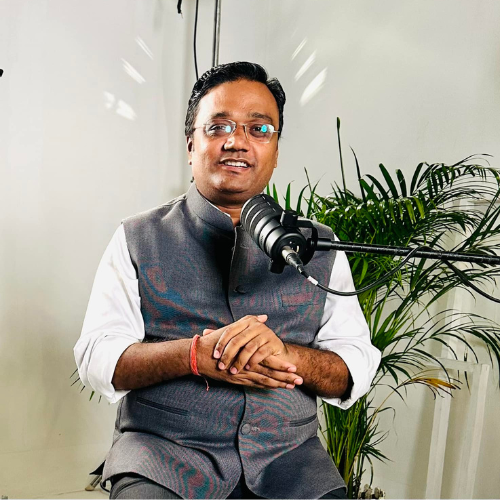
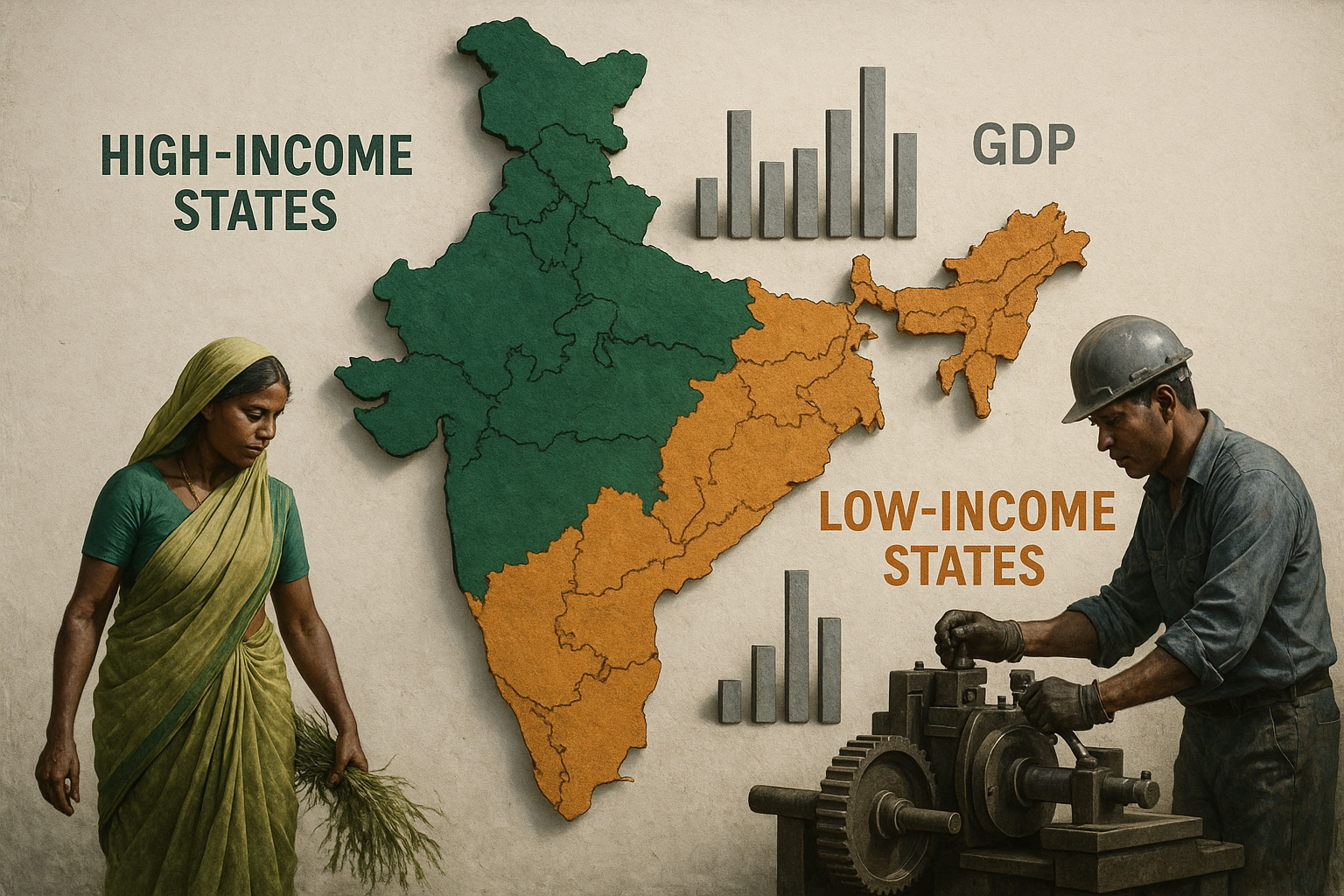
NITI Aayog Vice-Chairman Suman Bery has raised concerns over India’s widening GDP divergence between high- and low-income states. Speaking at the University of Hyderabad, he highlighted that high-income states with 26% of the population contribute 44% of GDP, while low-income states with 38% of the population contribute just 19%. While the imbalance is troubling, Bery noted that lagging states can accelerate growth, citing improving trends in some BIMARU states.
Core Development
High-income states: 26% of India’s population, 44% of GDP.
Low-income states: 38% of population, 19% of GDP.
Development strategies must vary between states like Tamil Nadu vs Bihar/UP.
Aggregate employment rose by 150 million, with 80 million women entering agricultural work, though many as unpaid family workers.
Key Drivers / Issues
Persistent structural inequalities across states.
Faster urbanisation and industrialisation in high-income states.
Lagging states often constrained by weaker infrastructure and governance.
Despite divergence, catch-up growth potential remains strong.
Stakeholder Impact
For state governments, the data highlights the urgency of tailored development models. Low-income states risk falling further behind unless reforms scale up. Businesses and investors may continue to prefer high-income states, deepening the divide. Workers, especially women, show rising participation but often in low-productivity roles.
Industry & Policy Reactions
Bery underlined the need to design state-specific development strategies. Economists noted that convergence policies, such as targeted infrastructure investment and skills development, could help unlock growth in lagging regions.
Challenges Ahead
Bridging infrastructure and skill gaps in low-income states.
Creating quality jobs beyond agriculture.
Ensuring inclusive growth without compromising fiscal stability.
Strategic Outlook
While the GDP divergence is concerning, India’s federal model allows state-level reforms and innovation to drive faster growth. Targeted interventions in low-income states could help achieve balanced regional development and reduce inequality.
Why This Matters
The GDP gap between rich and poor states highlights a critical challenge for India’s growth story. Achieving balanced regional development will be essential to sustain high growth and ensure inclusive prosperity.