
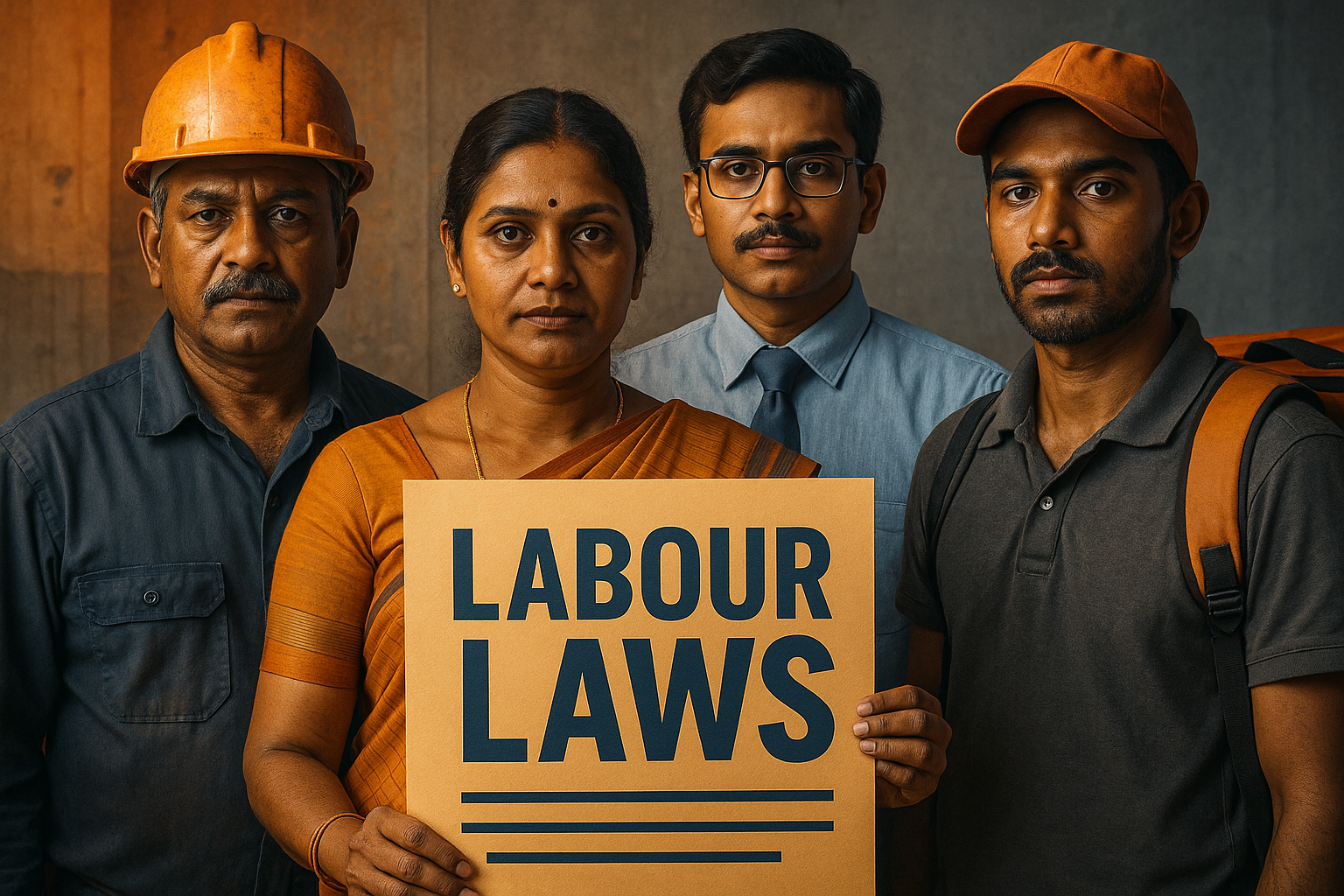
The Central Government is preparing to make all four Labour Codes fully operational from April 1, with draft rules expected to be pre-published shortly for stakeholder review. These Codes — on Wages, Industrial Relations, Social Security and Occupational Safety — aim to simplify over 100 existing labour laws, modernise compliance and improve worker welfare. The move marks a major transition in India’s labour-reform landscape. Focus Keyphrase: Labour Codes fully operational April 2026.
Core Development
The government is set to operationalise all four Labour Codes starting April 1, with pre-publication of draft rules expected soon to allow time for public and industry feedback. The consolidation aims to standardise definitions, streamline compliance requirements and create a unified regulatory architecture for India’s diverse workforce, spanning organised, unorganised and gig-economy sectors.
Key Drivers / Issues
The rollout is driven by several long-standing reform needs:
-
India’s earlier labour law regime consisted of 100+ fragmented laws, causing compliance complexity.
-
A unified framework is essential to improve ease of doing business and attract investment.
-
Workers in unorganised and gig sectors require social-security inclusion under a modernised system.
-
Employers need simpler, digital-first compliance norms that reduce litigation and administrative burden.
-
States have largely completed rule framing, paving the way for nationwide implementation.
Stakeholder Impact
-
Workers: Clearer entitlements on wages, safety, social security and dispute-resolution mechanisms.
-
Employers/MSMEs: A single regulatory framework eases compliance, lowers administrative cost and increases legal clarity.
-
Gig and platform workers: Formal recognition under Social Security Code enables access to welfare schemes.
-
BFSI sector: Higher social-security adoption boosts demand for insurance, pensions and digital-payment systems.
-
Regulators: Simplified enforcement reduces disputes and strengthens governance.
Industry & Policy Reactions
Industry bodies broadly support the move, citing long-delayed labour modernisation as a critical enabler for manufacturing, MSME growth and ease-of-doing-business. Labour economists note that the success of the Codes will depend on smooth implementation and awareness, especially among micro and small enterprises. Policy analysts believe the shift can significantly improve India’s global competitiveness if executed without friction.
Challenges Ahead
-
Ensuring state-level readiness and harmonisation of rules across all 28 states and UTs.
-
Addressing concerns around reduced take-home salary for employees under new PF and wage-structure norms.
-
MSMEs may struggle during transition due to limited compliance capacity.
-
Gig-worker and unorganised-sector enrolment will require strong digital infrastructure and outreach.
-
Avoiding overlapping interpretations during the initial rollout phase.
Strategic Outlook
If implemented effectively, the four Labour Codes could transform India’s labour market with unified laws, stronger worker protection and modern compliance systems. Over the medium term, the reforms are expected to boost formal employment, incentivise investment, and support India’s ambition to scale manufacturing and services. Digital-first enforcement and social-security expansion will be crucial to realising the Codes’ long-term potential.
Why This Matters
The move toward Labour Codes fully operational April 2026 marks one of India’s most significant labour-reform milestones. For businesses, it simplifies compliance; for workers, it expands rights and security; and for the BFSI sector, it drives adoption of pensions, insurance and welfare-linked products — strengthening financial inclusion across the workforce.