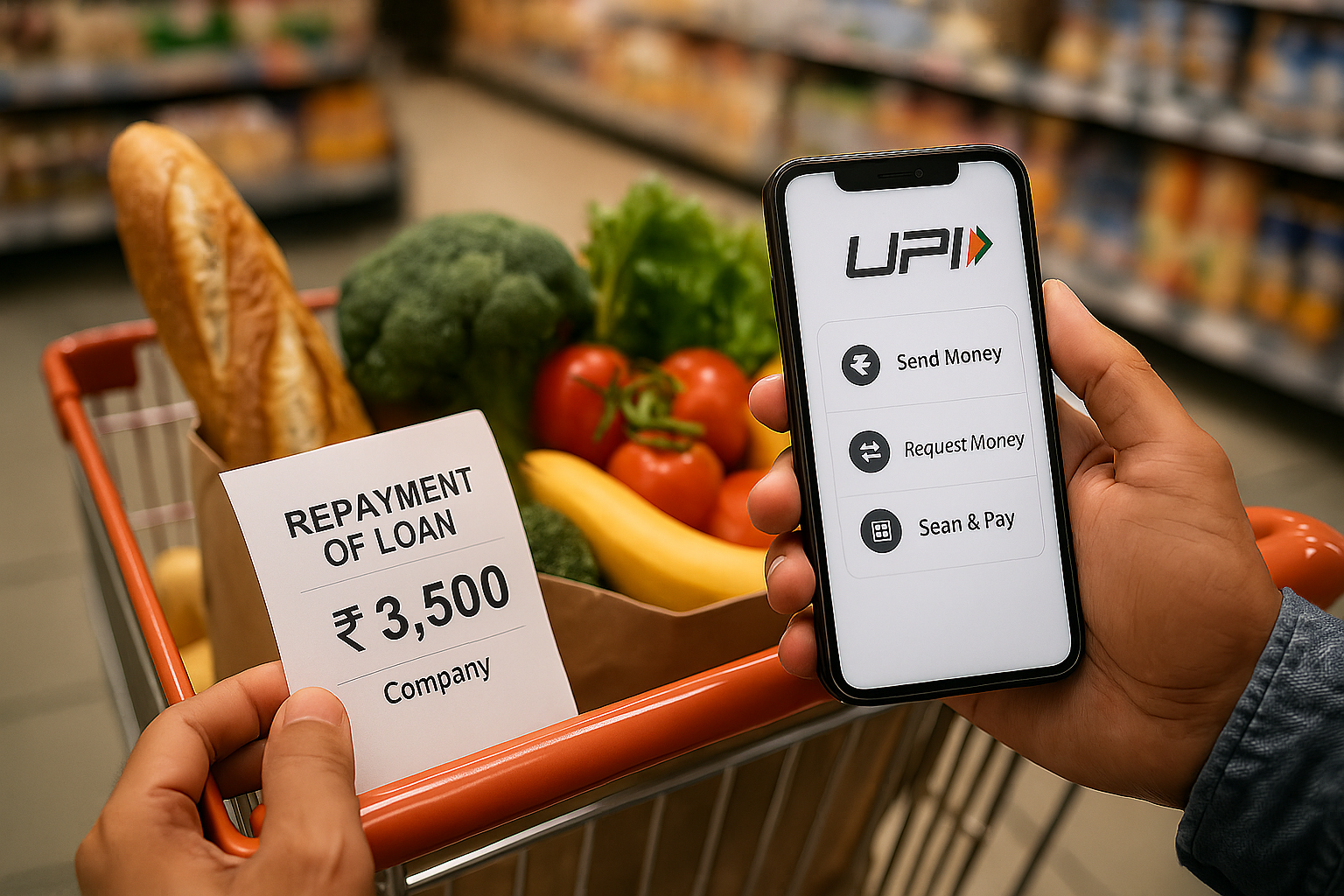
In July, UPI (Unified Payments Interface) recorded a staggering 19.5 billion transactions amounting to ₹25 lakh crore. While groceries and supermarkets dominated by volume, debt collection agencies emerged as the highest-value recipients—highlighting UPI’s expanding role in servicing everyday needs and significant financial obligations alike.
Key Data Trends & What They Mean
UPI Usage Spikes
Total Transactions: 19.47 billion (P2M: 12.38B worth ₹7.34 lakh crore; P2P: 7.08B worth ₹17.74 lakh crore)
Groceries & Supermarkets: 3.03B transactions, ₹64,882 crore
Debt Collection Agencies: Highest by value—₹93,857 crore via 161M transactions
Prominent categories also included fast-food, restaurants, utilities, and telecom services
Broader Adoption and Economic Integration
UPI has become a backbone of daily commerce in India, extending beyond retail to include debt servicing and utility payments, signaling widespread dependency across sectors. Its ubiquity provides a real-time lens into Indian consumer and financial behavior.
Policy Implications & Cost Sustainability
RBI Governor Sanjay Malhotra emphasised that while UPI remains free for users, “someone must absorb the underlying cost”—highlighting sustainability concerns amid rising usage.
What It Means for BFSI Stakeholders
| Stakeholder | Opportunity & Insight |
|---|---|
| Banks & Fintechs | Design tailored products for debt collection and merchant segments; explore revenue models beyond user charges |
| NPCI & Regulators | Stability of this infrastructure becomes a national priority amid explosive usage growth |
| Consumers | UPI remains a seamless, inclusive tool—covering everything from groceries to loan servicing |