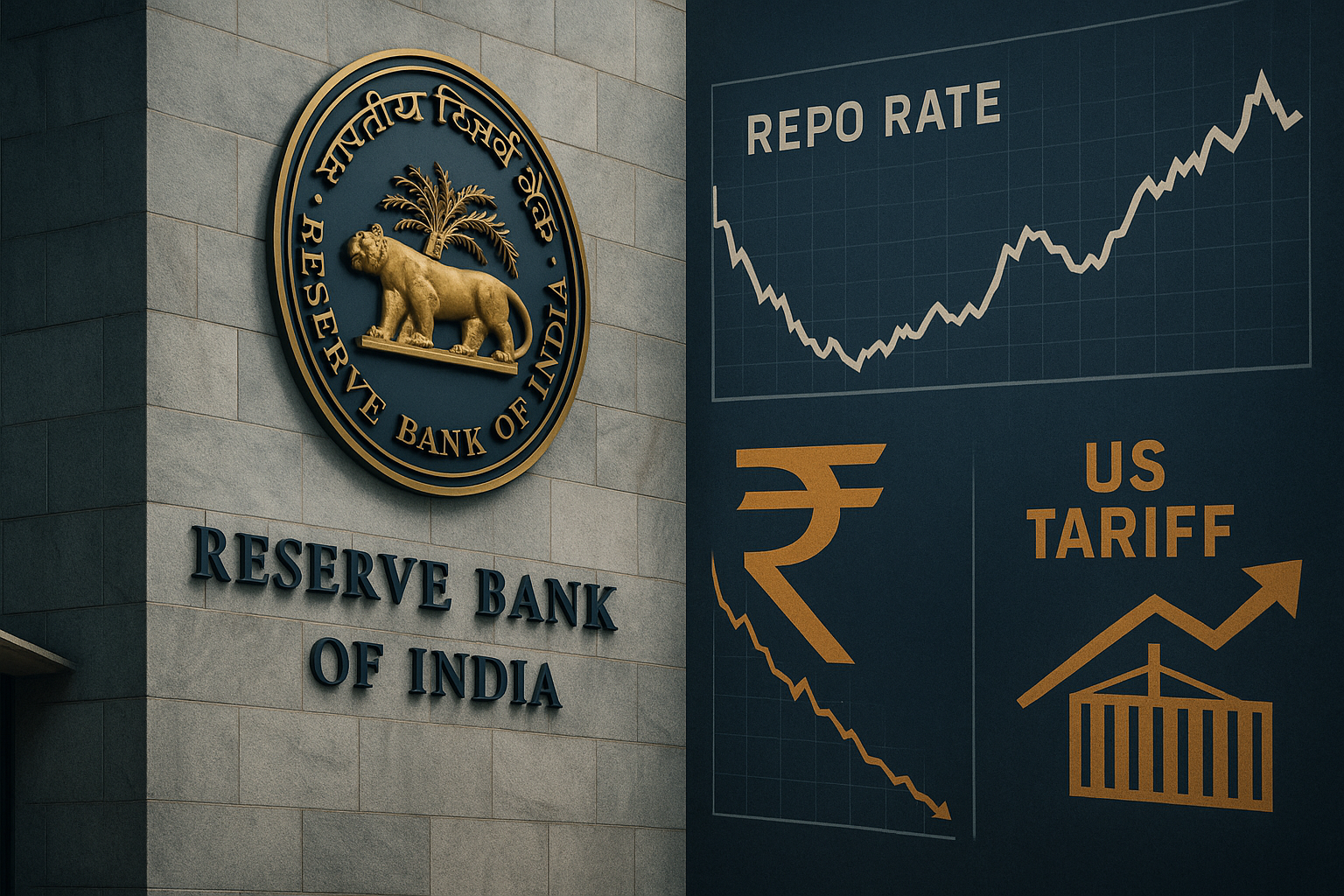
The Reserve Bank of India (RBI) will announce its policy decision this week with markets split on whether it will cut rates. While inflation is at the lower end of the target band (2.07% in August), growth risks from US President Donald Trump’s 50% export tariffs complicate the outlook. A Bloomberg poll shows 24 of 38 economists expect a hold at 5.5%, while 14 forecast a 25 bps cut. Analysts say a “dovish pause” remains the most likely outcome.
Core Development
RBI’s six-member Monetary Policy Committee (MPC) led by Governor Sanjay Malhotra meets Oct 1.
Inflation expected to average 2.7% in FY26, below RBI’s 3.1% forecast.
Growth seen at 6.5%, near the government’s 6.3–6.8% range.
Rupee at a record low complicates easing moves.
RBI already cut rates by 100 bps in 2025, but paused in August.
Key Drivers / Issues
GST 2.0 tax cuts reducing near-term inflation.
US tariffs hurting export sectors, dragging on growth.
Bond market caution, with 10-year yields up 30 bps since June.
RBI balancing price stability, currency management, and growth support.
Stakeholder Impact
For borrowers, a rate cut would ease EMIs, but status quo avoids currency volatility. Banks watch for policy signals that influence lending rates and bond yields. Exporters may gain from a weaker rupee, while investors await clarity on RBI’s stance.
Industry & Policy Reactions
Barclays: RBI may delay cuts to December for calibration.
ICICI Securities PD: A dovish pause best balances markets and credit transmission.
ANZ Bank: Weak rupee makes immediate cuts harder to justify despite growth risks.
Challenges Ahead
Sustaining growth momentum amid tariff shocks.
Managing inflation expectations if tax cuts fade.
Preventing capital outflows and excessive rupee volatility.
Strategic Outlook
RBI is likely to adopt a wait-and-watch strategy, holding rates steady but signaling openness to future cuts. This preserves policy space while cushioning India against global trade and currency headwinds.
Why This Matters
RBI’s decision will set the tone for India’s growth-inflation balance in FY26. A cautious stance highlights the complexity of managing domestic reforms alongside global shocks.