
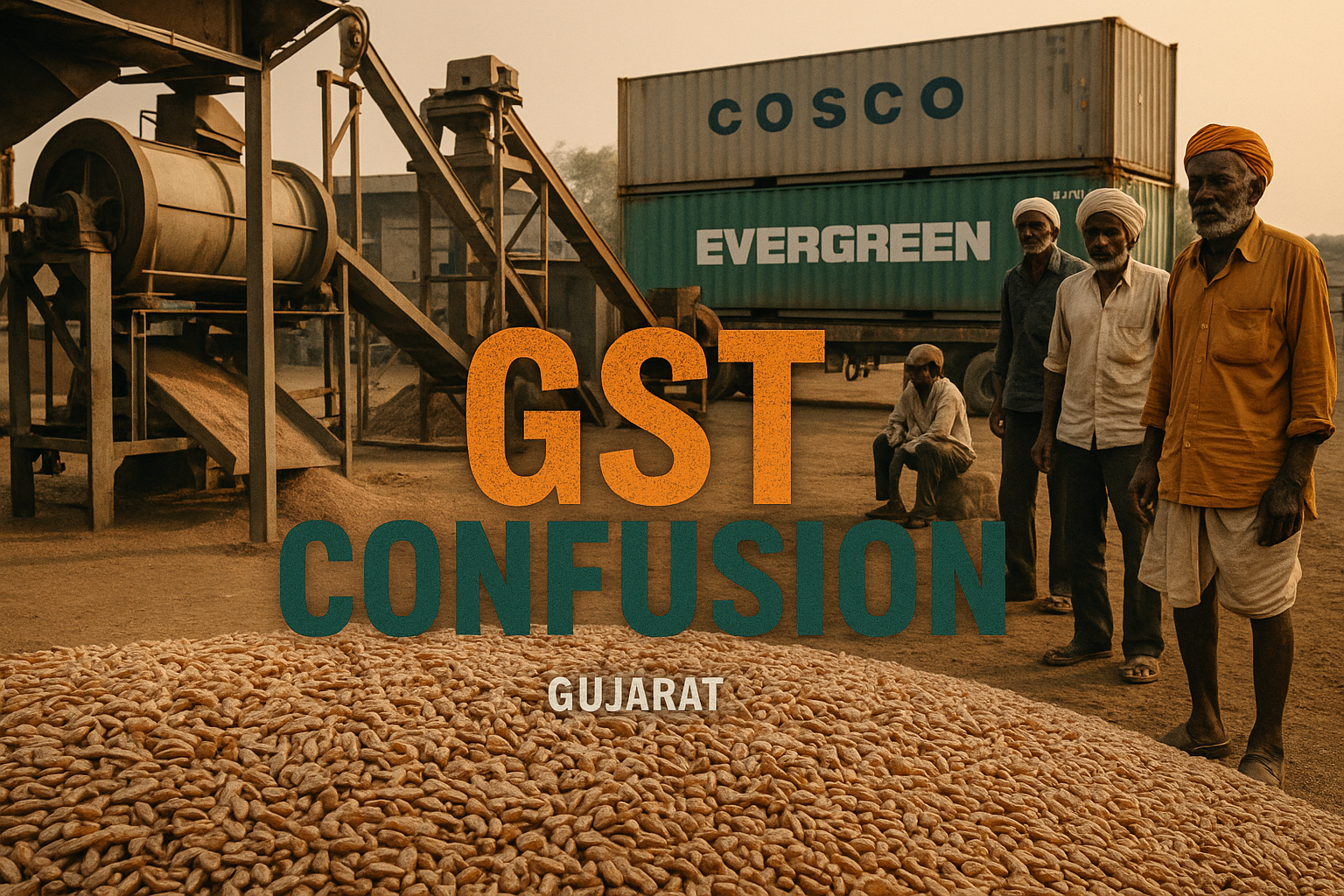
India’s isabgol (psyllium husk) industry has warned of a purchase halt from October 6, citing ambiguity in GST classification that has locked up capital for over a year. Despite government refunds, the delay in clarifying tax rates on fresh vs dry isabgol has caused severe financial stress for processors. The ₹3,500 crore export-driven sector fears a slowdown as overseas buyers postpone orders amid uncertainty.
Core Development
The All India Isabgol Processors Association (IPA) announced suspension of seed purchases from farmers starting October 6.
Processors pay GST on seeds despite refunds, as classification remains unclear.
The sector exports over ₹3,500 crore annually, with 70% shipped to the US.
Rajasthan produces 70% of India’s isabgol, while Gujarat handles 70% of processing, mainly through Unjha.
Key Drivers / Issues
Lack of clarity between fresh (0% GST) and dry (5% GST) classifications.
Capital locked in refund cycles for over a year, straining liquidity.
Slowdown in export demand due to US tariff shocks.
Continuous appeals to the GST Council since 2017 without resolution.
Stakeholder Impact
For farmers, halted procurement threatens immediate income loss. Processors face liquidity strain and export disruption. Government risks reduced foreign exchange inflows, while buyers abroad delay orders amid uncertainty.
Industry & Policy Reactions
IPA President Ashwin Nayak called the situation unsustainable, urging quick GST clarification. Exporters noted that earlier VAT systems exempted isabgol entirely, and its inclusion under GST has created administrative inefficiencies.
Challenges Ahead
Ensuring timely policy clarification to prevent supply chain collapse.
Maintaining India’s export competitiveness in the global dietary fibre market.
Avoiding long-term damage to the rural farming ecosystem dependent on isabgol.
Strategic Outlook
A quick policy intervention could restore confidence and preserve India’s position as the world’s leading isabgol exporter. Streamlining GST compliance and refund mechanisms is key to industry stability.
Why This Matters
The standoff reflects how tax ambiguities can disrupt agricultural exports and liquidity, highlighting the need for predictable GST frameworks to protect rural and export-driven industries.