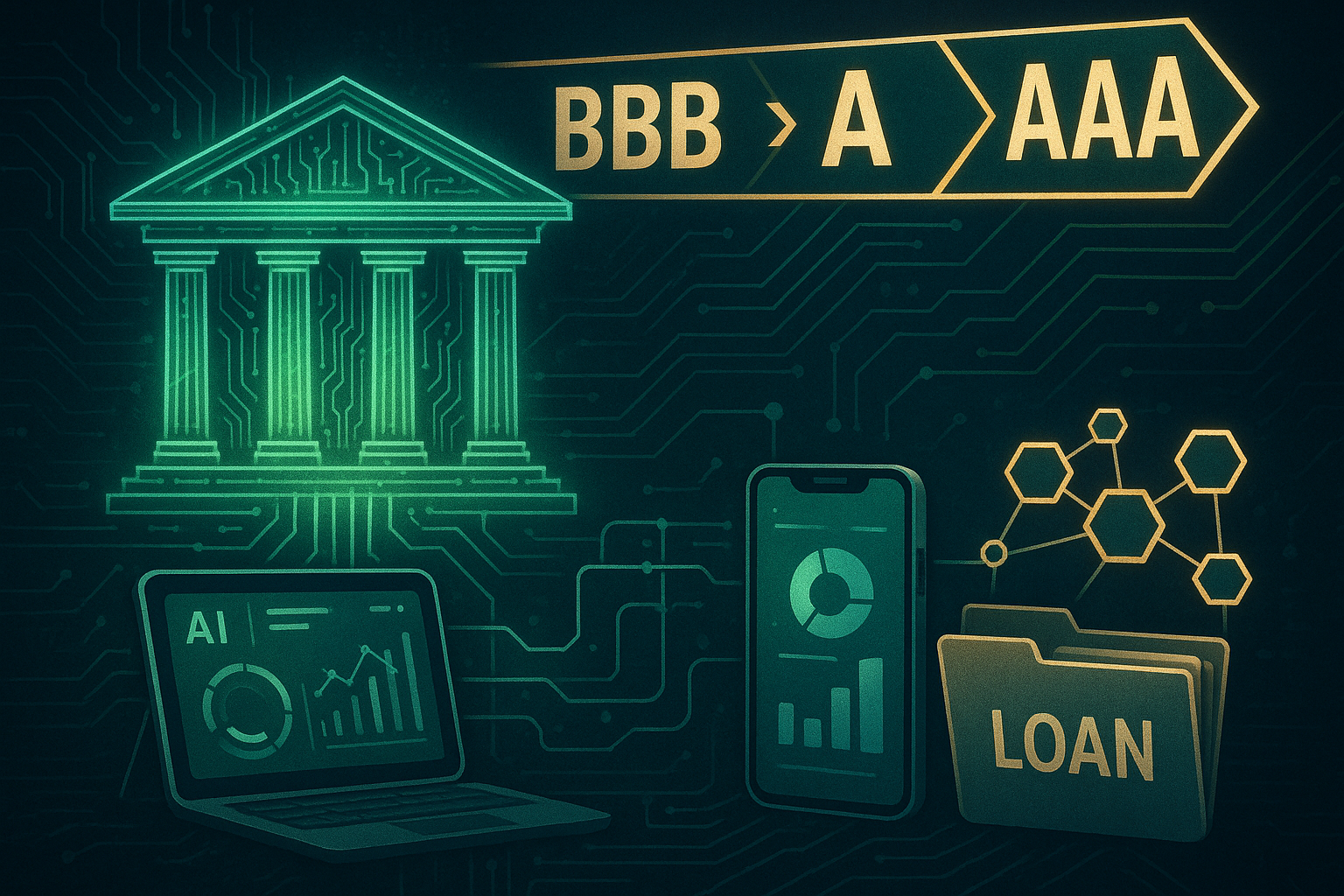
A new study has revealed a clear correlation between fintech adoption and stronger credit ratings for financial institutions. Banks, NBFCs, and cooperative lenders that integrate digital tools, AI-driven risk models, and data analytics into their operations are perceived as more resilient, transparent, and scalable—earning higher creditworthiness from rating agencies.
The findings underscore how fintech is no longer just a convenience add-on but a core driver of institutional credibility and growth in India’s evolving financial ecosystem.
Core Development
The study highlights that institutions with high levels of fintech integration—covering areas like customer onboarding, credit assessment, fraud detection, and digital collections—are rewarded with better risk profiles and ratings. This is because:
Automated processes reduce human error and operational risk.
Data-driven credit models improve loan performance.
Digital adoption signals long-term competitiveness and regulatory readiness.
Key Drivers Behind the Trend
RBI’s Push for Digitization: Regulatory frameworks like Digital Lending Guidelines and Account Aggregator ecosystem encourage fintech use.
Operational Efficiency: Cost savings from automation enhance profitability.
Risk Mitigation: AI-powered monitoring strengthens loan book quality.
Stakeholder Impact
Financial Institutions: Better credit ratings translate into lower borrowing costs and stronger investor confidence.
Investors: Gain transparency into the financial health of digitally advanced institutions.
Borrowers: Indirect benefits through faster approvals and wider credit access.
Industry & Policy Reactions
Experts view the study as timely, noting that credit rating agencies are increasingly evaluating digital adoption metrics alongside traditional financial indicators. Analysts predict that fintech-readiness will soon become a standard benchmark for assessing institutional resilience.
Challenges Ahead
Uneven Adoption: Smaller NBFCs and rural cooperatives face funding and capacity gaps.
Cybersecurity Risks: Greater digitization requires stronger defenses against data breaches.
Change Management: Resistance to new systems can slow implementation.
Strategic Outlook
The link between fintech adoption and improved credit ratings positions technology as a strategic imperative for financial institutions. Future competitiveness will hinge on building digital-first, risk-resilient, and customer-centric models.
Why This Matters
For India’s financial sector, fintech is not just a growth lever—it is now a determinant of trust, credibility, and capital access. Institutions that embrace digital transformation will not only scale faster but also enjoy stronger reputational and financial standing.