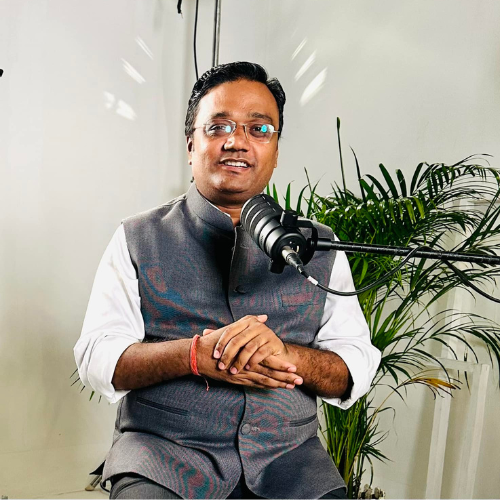
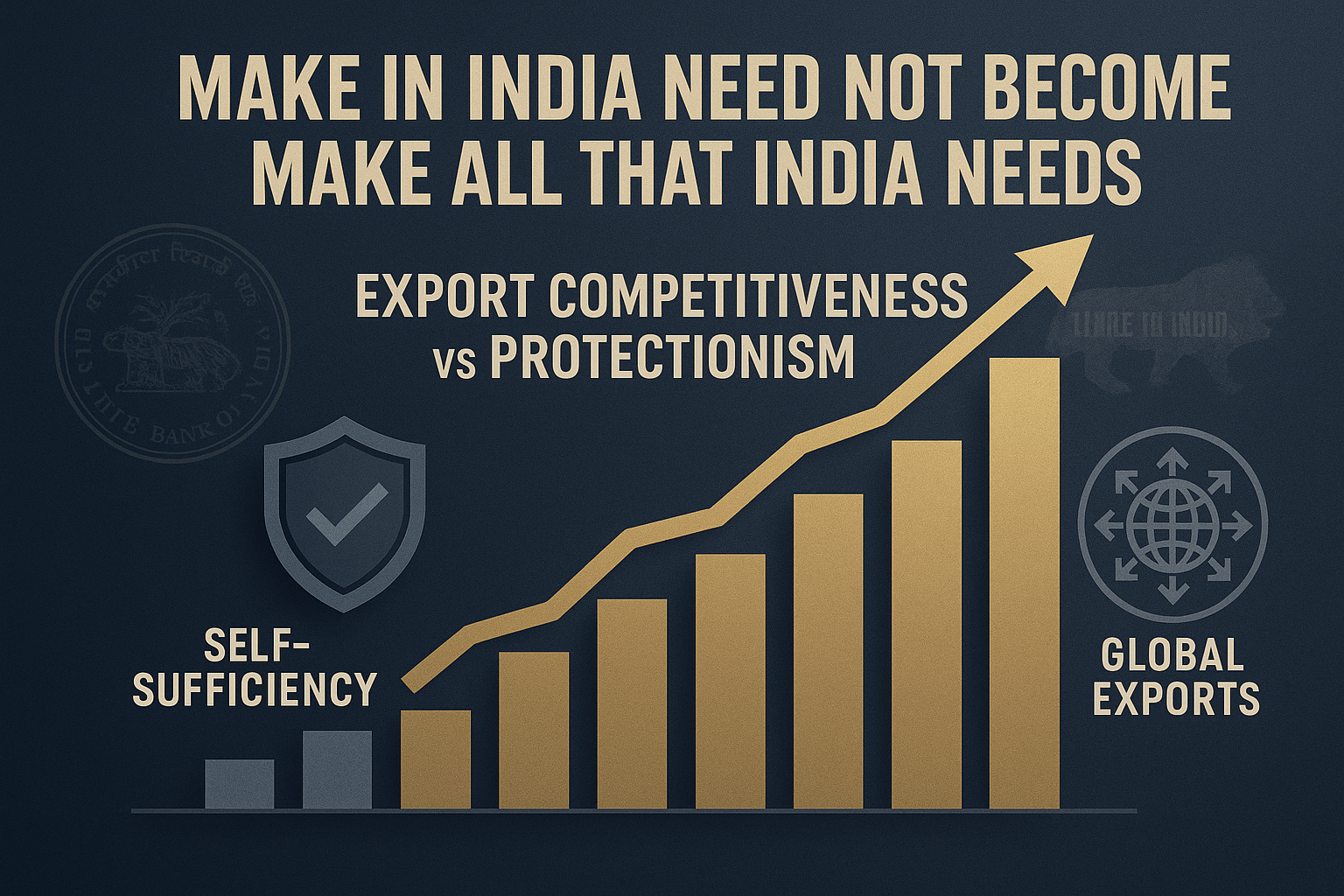
Former Reserve Bank of India Governor Duvvuri Subbarao has sounded a timely caution for India’s manufacturing ambitions. He warned that the Make in India initiative must not be reduced to a narrow policy of “Make all that India needs.” Instead, India should pursue strategic self-reliance in critical sectors while continuing to engage with the global economy.
Subbarao stressed that an overemphasis on self-sufficiency could isolate India, reduce competitiveness, and deter global investors. The real test of Make in India, he argued, lies not in protectionism but in becoming an export-led, globally integrated manufacturing hub. He further pointed to rising trade barriers, particularly the recent 50% U.S. tariff shock, as a signal for India to recalibrate its trade strategy.
Key Highlights
“Make All That India Needs” Isn’t the Aim
Subbarao noted that manufacturing for global markets is the true spirit of Make in India. If the policy shifts to producing everything domestically, regardless of efficiency, India risks:
Losing its export competitiveness
Attracting fewer global manufacturers looking for alternatives to China
Stagnating productivity due to lack of external competition
He underlined that self-reliance should be an outcome of strength, not a retreat into isolation.
Tariff Shock: Blow to Export Competitiveness
The U.S. tariffs announced in 2025 have sharply raised concerns:
50% duties on Indian exports (except pharma and electronics) put pressure on India’s labour-intensive sectors.
Industries like textiles, gems & jewellery, and leather face shrinking margins and reduced demand.
With the U.S. contributing nearly 20% of India’s export market, the fallout could shave growth off GDP.
India now faces the highest tariff rates in Asia, weakening its standing compared to Vietnam, Bangladesh, and Indonesia—nations that are increasingly preferred in the China+1 strategy.
Subbarao warned that unless India repositions itself as a credible low-cost, high-quality exporter, such tariff shocks could undo years of progress.
Self-Reliance Must Be Strategic, Not Blanket
The Atmanirbhar Bharat agenda, according to Subbarao, must be interpreted with practical selectivity:
Essential sectors like defence, semiconductors, energy security, and critical technologies require higher levels of domestic capacity.
Non-strategic sectors should remain open to global integration to ensure efficiency, cost reduction, and innovation inflows.
India should leverage global supply chains instead of attempting to replicate them in silos.
In his words, “Self-reliance cannot mean shutting the door—it must mean building strength to stand and compete in the open.”
Pragmatism in Trade—Not Emotional Safeguards
On trade diplomacy, Subbarao urged India to act with pragmatism instead of sentiment:
Sensitive areas like agriculture and dairy can remain shielded.
Calibrated concessions—such as tariff-rate quotas, phased liberalization, or sector-specific negotiations—can unlock breakthroughs.
India should pursue win-win trade frameworks that protect local interests but also reassure global investors of its commitment to openness.
This approach, he argued, would ensure that India does not lose credibility at a time when global manufacturers are actively diversifying their supply chains.
Why This Matters
Investor Confidence
A shift toward blanket protectionism risks pushing away global manufacturers who are seeking India as part of their China+1 strategy.Export Competitiveness
With the U.S. and other markets raising trade barriers, India must double down on efficiency, productivity, and policy consistency to remain competitive.Strategic Balance
True Atmanirbhar Bharat is about carefully choosing where to be self-reliant (e.g., defence, energy) and where to stay globally connected.Systemic Credibility
India’s long-term trade policy stance will influence whether it is seen as a trusted global partner or an inward-looking economy.